
Borneo, Malaysia · 2015 · Foundation · Forest · 23 Nov 2026
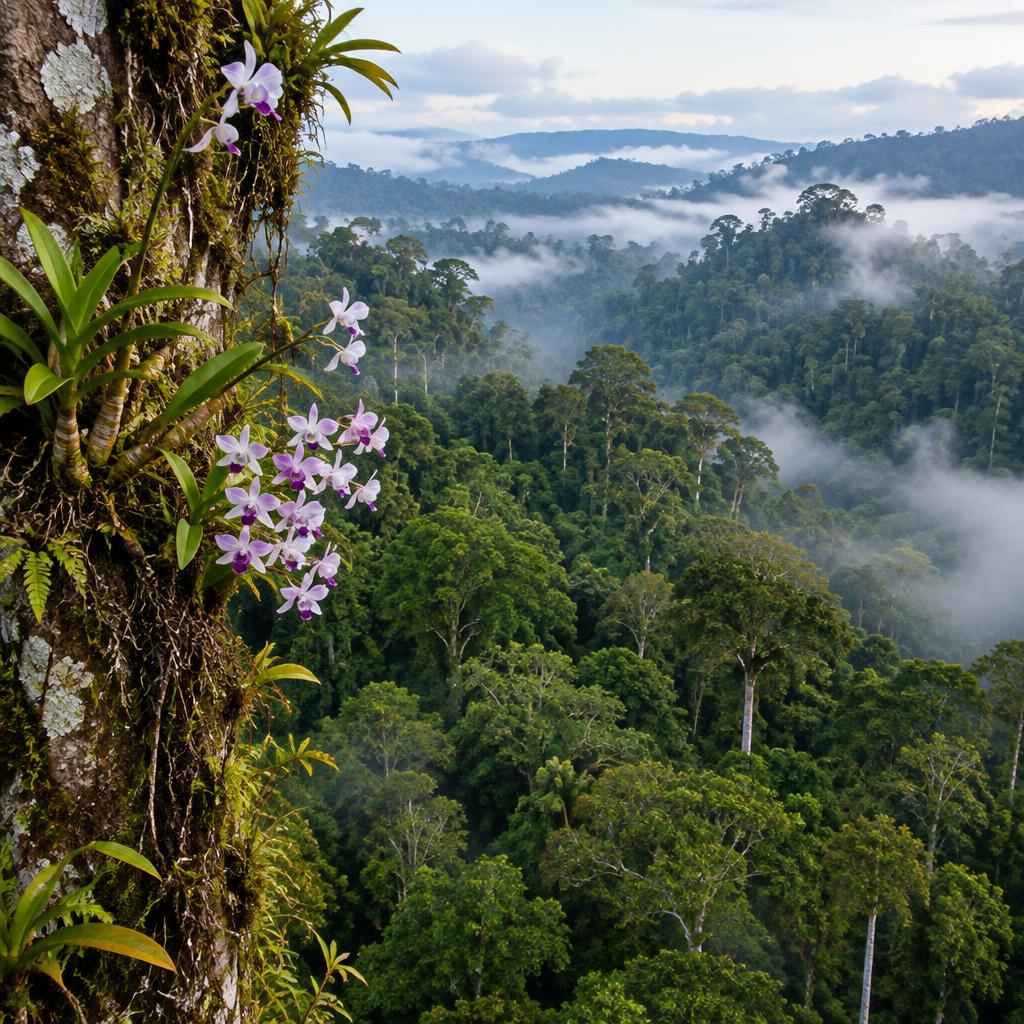
CV FMU, Borneo — Forest Management Unit, Dendrobium Cultivation
1metre
UAV Wingspan for Forest Sensing
2
Sales Markets Organized
01
The demand
The demand
Since 2013, this project has overseen the strategic management of a 15,000-hectare Forest Management Unit (FMU), integrating a Consensus Mosaic Framework (CMF) team to manage the transformation of carbon formation, composition, calculation, capture, and storage within tropical rainforests. This effort integrated raw ecological assets into an EAVC framework. The Malaysian Primary Rainforest required a sustainable forest management system that generates productive economic value without damaging the existing ecosystem.
02
Solution
How IESASP organized the solution
1. Carbon Formation & Composition: Multidimensional Primal Collection (Since 2013) We have utilized long-range drone technology in this terrain since 2013. Instead of standard four-wing quadcopters, we deploy large, fixed-wing aerial platforms built for long-distance data collection. This system executes our GIS scanning, delivering a macroscopic view of the entire forest at once. Our CMF team member won the drone competition championship in collaboration with Universiti Teknologi Sabah, ensuring our ability to operate precise navigation and high-resolution data collection across dense primeval canopies. 2. Multi-Dimensional Primary Signals We apply our Primary (P) framework to acquire high-density, highly correlated, and multi-dimensional primal signals based on demand. The CMF team developed proprietary hardware devices for real-time data transmission in the rainforest, capable of accessing and sending data from 60 kilometers away where there is no cellular signal tower. This setup provides primary signal awareness across 1 to x different dimensions—specifically light, air, wind, water, soil, energy, and biology—allowing for strict mutual cross-validation (A) to verify calculation accuracy. 3. Carbon Capture: Botanical & Canopy Restoration We send our local employees to qualified institutes to train, run laboratory environments dedicated to cultivating aerial root plants (specifically Dendrobium). These epiphytic plants assist the rainforest by absorbing moisture and nutrients directly from the air, stimulating canopy micro-ecosystems, and accelerating the overall carbon capture capacity of the forest architecture. 4. Carbon Storage: Traceable Assets & Transparent Ledgering Once cultivated, these plants are moved directly into the primeval forest. Physical Asset Tagging: Field teams set up an individual QR code tracking label for each plant to anchor it to the carbon value. A dedicated website links to these labels, displaying the live carbon status and growth metrics of the plants for verified carbon tracking. 5. Systemic Expansion: Derivative (D) Local Economies Based on this operational baseline, the CMF team has expanded into Derivative (D) local cultivation. We produce premium local agricultural assets, including durian, coffee, and Dendrobium products, within EAVC ecosystems. These commercial products are exported and sold directly to Hong Kong, with all trade payments cleared and settled.
03
O&M
Long-term operations & maintenance
① P — Primal Perception: Ultra-long-distance real-time information sensing and uploading ③ D — Derivative: a) Organised cultivation: implement mosaic puzzle-style Dendrobium planting without damaging existing trees b) Information team: real-time data uploading from the primary forest c) Carbon conversion: productise carbon-sequestering plants and generate revenue through certified carbon credits
04
Outcome
Outcome & EAVC status
The initiative pioneered carbon value formation and collection through real-time raw signal sensing, deploying a proprietary long-range telemetry network capable of transmitting point-to-point data across 60km of tropical rainforest. In 2016, the project secured the championship in the National UAV Competition in collaboration with University Malaysia Sabah. By organizing the CMF team, the project industrialized high-value estates—including durian, cocoa, and coffee—and achieved a critical milestone in the commercial productization of aerial roots plantation - Dendrobium, establishing a successful export to the Hong Kong market.